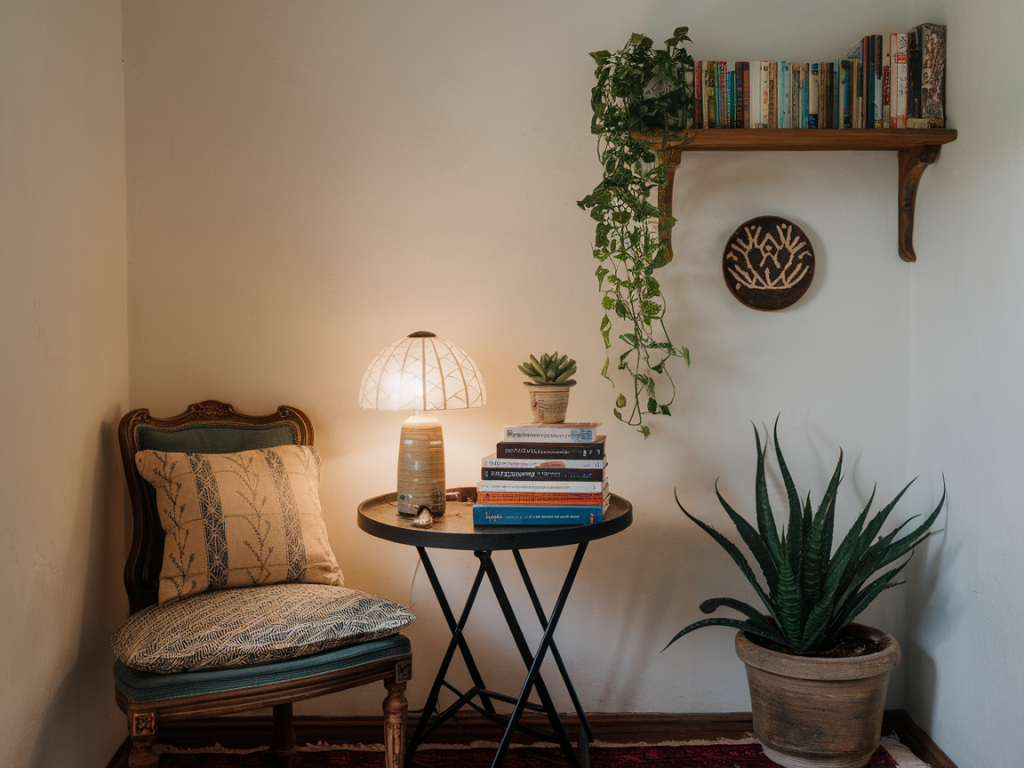
There’s something quietly magical about carving out a tiny corner of the house that exists only for reading. I’ve made a habit of turning awkward nooks and narrow alcoves into cosy retreats, usually with things I already have at home. If you’re short on space or on a budget, you don’t need a fancy armchair or a weekend trip to a decor store — you can stage a lovely reading nook in an afternoon using familiar items and a little thoughtful arranging.
Start with the right spot
Pick a corner that feels naturally calm. For me that’s often near a window where morning light pours in, but a quiet corner of the living room or even a wide shelf can work. The aim is a small area that feels intentionally set aside from the rest of the room. If you’re not sure which spot will work, try sitting in a few places for ten minutes and noticing where you feel most relaxed.
Seating ideas using what you already own
You don’t need to buy a designer armchair to read comfortably. Here are low-cost seating solutions I frequently use:
- Layered cushions on the floor: I pile two sitting cushions and a lumbar pillow against a wall. It’s snug and perfectly suited for short reading sessions.
- Dining chair with a throw: A simple wooden dining chair becomes instantly more inviting with a soft throw folded over the back and a cushion for support.
- Window seat make-do: If you have a wide windowsill, add a folded blanket and a cushion — it feels like a built-in nook.
- Small bench or ottoman: Topped with a cushion and a tray nearby, this can be both seat and side table in one.
Lighting: soft and layered
Good lighting is essential. Natural light is ideal during the day, but evening reading needs a warm, directed lamp. I usually combine two simple solutions:
- A floor lamp that casts warm, downward light. If your lamp has a bright bulb, swap to a 2700K or 3000K soft-white bulb for a gentler glow.
- A small clip-on lamp or reading light attached to a shelf or chair, which gives focused illumination without lighting the whole room.
If you don’t own a floor lamp, a table lamp on a nearby surface or even a battery-powered LED book light will do. The point is to avoid harsh overhead lighting and to create a softer atmosphere.
Make it touchable: textiles and layering
Textiles bring the nook to life — they add warmth, texture, and a sense of enclosure. I reach for scarves, throws, and spare cushions:
- Use a large throw as a base layer on a chair or bench.
- Add a smaller, firmer cushion behind your lower back for support.
- For winter, layer a woollen throw; in summer, a linen blanket feels lighter but still cosy.
A good rule: combine one soft, plush texture (faux fur or fleece) with one flat, woven texture (cotton or linen) to create visual depth without clutter.
Small furniture and surfaces
Your side table can be anything that’s stable and reachable. I’ve used:
- A stack of books topped with a wooden cutting board
- A small crate or milk box
- A piano stool or bedside table
Place a cup, a small vase, and a lamp or candle on this surface. If you have limited floor space, use a floating shelf at arm’s reach as your “table.”
Personal touches that make it yours
This is where the nook becomes intimate. Add one or two small things that make you smile:
- A favourite mug or thermos for tea
- A small framed photo or postcard
- A sprig of dried flowers or a tiny plant
- A notebook and pen for jotting down quotes
Resist overfilling the space — the goal is a calm, uncluttered spot where you can breathe and read without distractions.
Sound, scent and ambient comfort
These sensory details make a nook feel like a little ritual.
- Sound: I often play low-volume instrumental playlists (I like slow piano or acoustic guitar) or a short nature sounds loop. If you live in a noisy area, a white-noise machine or a fan can mask distractions.
- Scent: Light a small candle (soy or beeswax) or use a subtle stick of incense. Lavender or cedar are relaxing, but keep scents light so they don’t overpower the pages.
- Temperature: Keep a small blanket at hand for chilly evenings and a thin throw for warmer months. If drafts are an issue, a draft excluder at the base of a door or window helps retain warmth.
Storage and organisation — tidy but reachable
One of my favourite small rituals is a tiny, useful bookshelf next to the seat. But if you don’t have space for a shelf, use these household substitutes:
- A large basket for current reads
- A stack of books tied with a ribbon for an attractive temporary shelf
- A shallow tray for bookmarks, reading glasses, and a notepad
Keep only a few books in the nook at a time — rotating them keeps the space fresh and avoids visual clutter.
Quick styling guide: what to do in 30 minutes
If you want to set up your nook quickly, follow this short routine I often use:
- Clear and clean the chosen spot
- Place your seating and add a throw and cushion
- Position a lamp or book light
- Arrange a small surface with a tray for essentials
- Add one plant or vase and a personal object
- Play soft music and light a candle
Practical table: household item substitutions
| Typical item | Substitute from around the house |
|---|---|
| Armchair | Stacked floor cushions or dining chair with padded throw |
| Side table | Stack of books, crate, cutting board on top of stool |
| Floor lamp | Table lamp on nearby surface or clip-on lamp |
| Bookshelf | Large basket or stack of books on the floor |
Habits to make the nook an actual habit
Designing the nook is the easy part; turning it into a regular practice takes small habits. I set a gentle rule for myself: sit in the nook for at least 10 minutes each day, even if I don’t read. Sometimes I journal or simply breathe. It’s the tiny repetition that turns a corner into a refuge.
If you try this, I’d love to hear what you used from around the house and which spot you chose. Small personal changes can create surprising pockets of calm — and a well-staged reading nook is one of my favourite, most reachable ones.