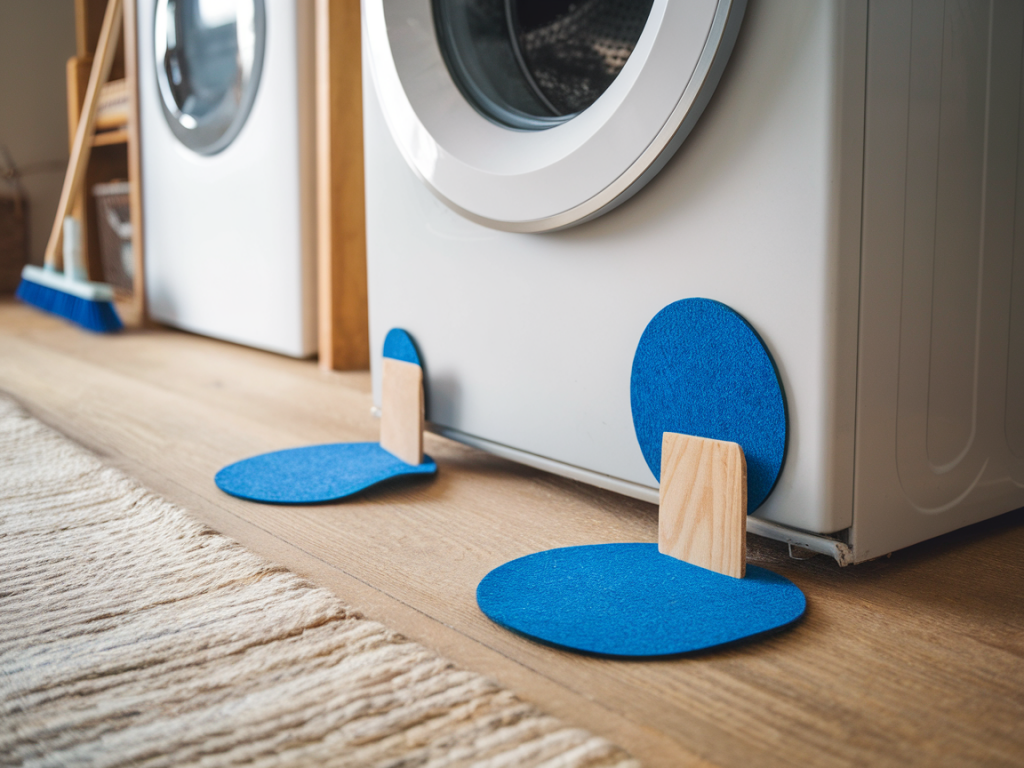
There’s nothing quite like the jolt of a washing machine thumping across wooden floors to ruin a calm morning. I’ve had that sinking feeling — the machine marching across my utility room, leaving scuff marks and making the whole house feel less steady. After a few experiments (and one embarrassing afternoon of holding the machine in place while it spun), I found a simple, cheap, and surprisingly effective fix using felt pads, a plywood shim, and a handful of £10 tweaks. I’m sharing the method I used so you can stop the noise, protect your floor, and sleep a little easier.
Why washing machines thump and walk
Before we fix anything, it helps to understand why it’s happening. Most washing machine movement comes from one or more of these issues:
Often it’s a combination: an old wooden floor that flexes slightly, a heavy front-loader on one foot that’s a millimetre shorter, and a spin cycle that amplifies every wobble. The good news is that the first-line fixes are cheap and low-effort.
What you’ll need (most of it under £10)
These are items I bought locally and online — none of them require an electrician or specialist tools:
Most items cost under £10 total if you already have a few bits around the house. The felt pads were the cheapest game-changer for me.
Step-by-step: Calm the thump with felt pads and a plywood shim
Here’s the approach I used, written as I would explain it to a friend — simple, direct, and practical.
Why felt pads work (and which type to choose)
Felt pads are a low-tech solution but extremely effective for wooden floors because they:
Choose thick, dense felt rather than thin, decorative furniture pads. The ones I prefer have a felt thickness of at least 3–6mm and a strong adhesive backing. Brands like Scotch or store-brand heavy-duty felt pads work well; the important thing is density and adhesion.
Quick fixes under £10 — what I tried and what worked best
Here’s a small table I put together showing common low-cost fixes and how effective they were in my tests:
| Fix | Cost (approx.) | Effectiveness |
| Thick felt pads | £3–£6 | High — instant improvement in grip and quieter spin |
| Plywood shim (small piece) | £0–£2 (scrap) | High — levels out uneven feet nicely |
| Rubber anti-slip mat | £5–£10 | Medium to high — reduces transferred vibration |
| Replacing worn rubber feet | £5–£15 | High (if original feet are degraded) |
When to call a professional
If you’ve tried these tweaks and the machine still walks, it may be an internal problem: broken springs, damper failure, or a serious imbalance in the drum. Signs you should call a repairer:
For me, the felt-and-shim method solved 90% of the problem. If you reach the limit of DIY fixes, a laundry appliance repair service (many local plumbers also offer appliance repairs) is worth the estimate. Sometimes a simple replacement of suspension dampers is the answer.
Extra tips I learned along the way
If you try this and it helps, I’d love to hear about it on Restoring Daisy — little wins like these are exactly the kind of thing I enjoy sharing. If it doesn’t solve the issue, tell me what you tried and what the machine’s behaviour is like; sometimes a different tweak is all that’s needed.