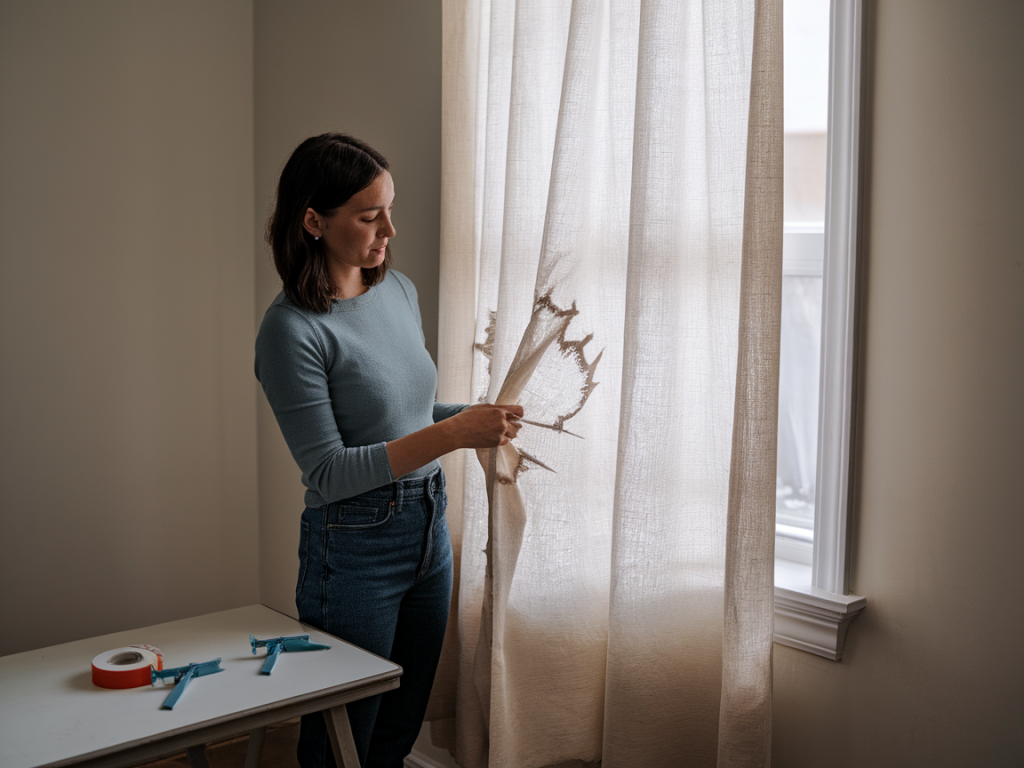
I had a curtain disaster last week: a pair of beloved linen panels caught on the corner of a chair and ripped clean through. They weren’t expensive, but they were exactly the soft, lived-in sheets of light I love in my sitting room. I didn’t have time—or patience—for a sewing marathon, so I reached for no-sew hem tape and a pack of IKEA curtain clips. Thirty minutes later the curtains looked tidy, the rip was hidden, and the room felt calm again. If you’re short on time or confidence with a needle, this is a gentle, practical fix that really works.
Why no-sew hem tape and curtain clips?
No-sew hem tape (often sold under names like Stitch Witchery or generic heat-activated hem tape) bonds fabric when you apply heat. It’s quick, holds well on many fibres, and keeps edges neat without stitches. Curtain clips—like IKEA’s DIGNITET-style clips or separate curtain clip rings—let you rehang panels that have lost their top hem or header, or simply give a fresh hanging solution without reshaping the fabric.
This combination is especially useful if you want a temporary but tidy repair, are renting, or simply prefer a fast, low-effort option. It also avoids changing the curtain length or creating awkward puckering that can happen when hurriedly sewing by hand.
What you'll need
| Materials | Notes |
| No-sew hem tape | Heat-activated, suitable for your fabric—polyester-friendly or stated for mixed fibres |
| Curtain clips (with rings or hooks) | IKEA clips, or basic metal/plastic clip rings; choose colour to blend with fabric |
| Iron and ironing board or cloth | Use a pressing cloth to protect delicate fabric |
| Scissors | Sharp pair for trimming frayed edges |
| Ruler or measuring tape | For aligning and matching lengths if needed |
| Pins or fabric clips (optional) | To temporarily hold edges before ironing |
Quick prep: make a tidy workspace (5 minutes)
Clear a table or the floor near an outlet, bring your iron and board, and lay out the curtain flat. Smooth it gently with your hands—this is a calming moment for me; I breathe out and focus on small, steady motions. Trim any long, frayed threads around the tear. If the fabric is dusty, give it a quick vacuum with a soft brush attachment or a shake outside.
Step-by-step repair (20–25 minutes)
My method varies slightly depending on where the tear is (side seam, lower hem, or near the top heading). Here’s a version that covers a common case: a vertical rip in the body of the curtain, a few inches long.
After hanging, step back and smooth the curtain with your hands. The fabric will settle and any puckers will relax after a day or two.
Tips that make a big difference
Troubleshooting
If the hem tape didn’t stick:
If the curtain looks puckered after repairing:
When to choose a different fix
No-sew tape is brilliant for quick fixes and most daily fabrics, but there are times when sewing or professional repair is better:
Small rituals, big comfort
Fixing a curtain felt like a tiny act of care, but it shifted the mood of the whole room. I often find that small, practical tasks—mending, re-hanging, ironing a sprig of curtain back into shape—have an oddly soothing effect. They remind me that pieces of our life aren’t brittle; they can be gently put back together. If you try this, I’d love to hear which hem tape and clips you used, and how your curtains look once they’re back on the pole.