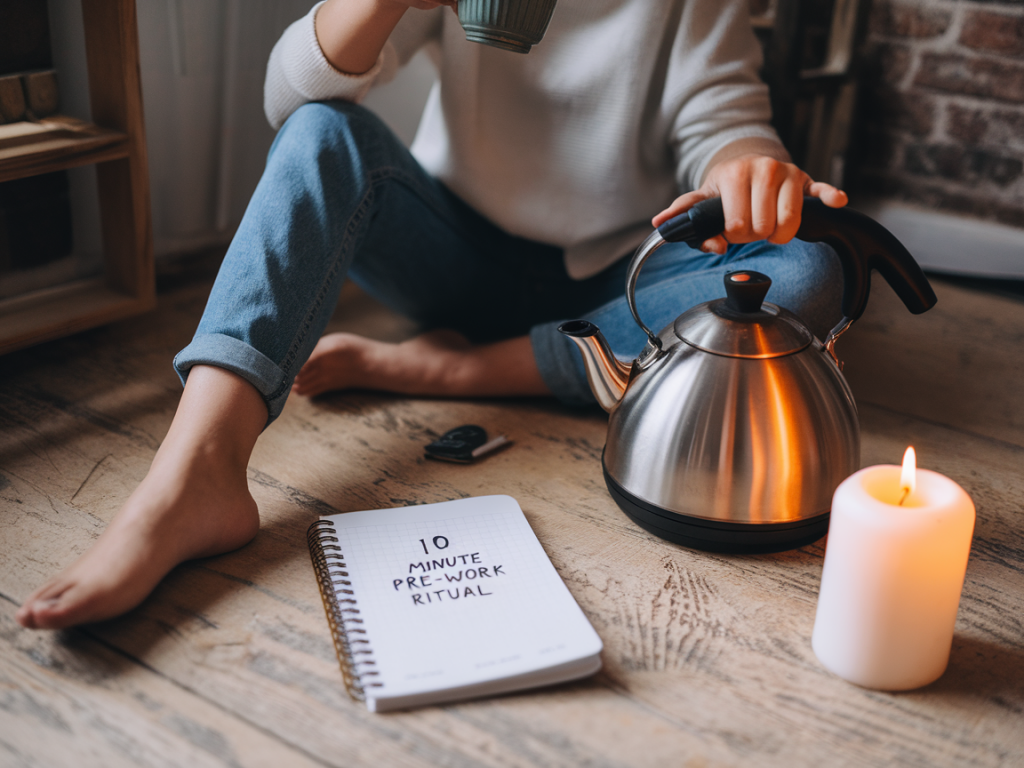
My mornings used to be a blur of alarms, scrolling, and rushing. Somewhere between checking my phone and making it out the door I felt scattered and small, as if the day had already decided how I would feel. Over time I found that a very small, consistent ritual — one that takes about ten minutes and uses nothing more than a kettle, a notebook, and a single conscious breath — helps me step into the day with a little more calm and clarity. It’s simple, practical, and gentle, and I want to share how I do it so you can try it and adapt it to your life.
Why a 10-minute ritual?
People often ask: “Why only ten minutes?” and “Will such a short routine really make a difference?” For me, the appeal is practical. Ten minutes is small enough to be realistic on busy mornings but long enough to interrupt the autopilot and create a pivot point in the day. It’s not about perfection — it’s about building a tiny habit that compounds. That single breath at the centre helps me move from doing to being, and the kettle and notebook provide sensory anchors: warmth, sound, ink, and the tactile pleasure of pen on paper.
What you need
Very little. You likely already have these items:
Optional: a favourite mug, a teaspoon of honey, a slice of lemon, or a few tea leaves. I sometimes keep a tiny vase with a single bud near the kettle; it’s an extra reminder to notice beauty in small things.
How it fits into a busy morning
You might be wondering: “When exactly do I do this?” I do mine right after I wake and brush my teeth — before phones, emails, or news. If mornings are chaotic, try doing it while your lunch heats or as your shower warms. The important thing is consistency. Ten minutes at roughly the same time each day helps the brain associate the ritual with calm and focus.
Step-by-step: the 10-minute ritual
Below is a simple sequence I follow. Feel free to adjust the order or timing to suit your needs.
Why a single breath matters
People often underestimate the power of one intentional breath. Physiologically, a slow, deliberate exhale activates the parasympathetic nervous system, which calms the heart rate and reduces stress hormones. Psychologically, it gives you permission to pause. For me, that breath is a hinge — a tiny, repeatable act that signals, “I am here. I am steady.” Even on days when my notebook stays blank, that breath makes space for the day to begin differently.
Notebook prompts that actually work
When people ask, “What should I write?” I suggest keeping it simple. Here are three prompts I rotate through:
I set a kitchen timer for five minutes sometimes; the limit keeps the practice focused and prevents me from falling into perfectionism.
Practical questions people ask
Q: “What if I don’t have time?” — If you can spare five minutes, adapt the ritual. Boil the kettle, take one steady breath, and jot a single intention. Even that small act shifts your starting point.
Q: “Do I need a special notebook?” — No. Use a notepad, an index card, or an app if pen and paper aren’t possible. That said, a physical notebook has a tactile quality that I find grounding; seeing the pages accumulate becomes a visible reminder of consistency.
Q: “Will this replace my existing morning habits?” — The ritual is meant to integrate with your life, not to replace everything. Keep what works and fold this into the gaps. It can sit beside your cup of coffee, replace a scroll session, or occupy the time you’d otherwise spend feeling frazzled.
Real-life tweaks and examples
My sister, who works shifts, adapted the ritual to evenings: the kettle preps a calming herbal tea, one breath helps her unwind after work, and the notebook holds three gentle reflections before sleep. A friend with young children does a five-minute version while the kids watch a short cartoon; she uses the single breath in the car before dropping them at school. These small adaptations keep the ritual usable in different seasons of life.
A tiny table: time breakdown
| Action | Approx. time |
| Boil water and small stretch | 1–3 minutes |
| Pour, smell, hold the mug | 1 minute |
| Intentional single breath | 30 seconds |
| Notebook practice (gratitude/intention/brain dump) | 4–5 minutes |
If you try this ritual, you don’t need to do it perfectly. Some mornings the kettle will take longer, the breath will feel shallow, or my notebook will collect just a single line. The point is repetition, not performance. Over weeks I noticed a steady shift: I start the day with a bit more gentleness, a clearer priority, and a sense that I’m moving with intention rather than being pushed by the day.
If you’d like, come back and tell me how you adapted the ritual — which tea you chose, what your single-sentence intention was, or how the single breath felt. Small rituals like this are more powerful when they’re shared and shaped by real lives.