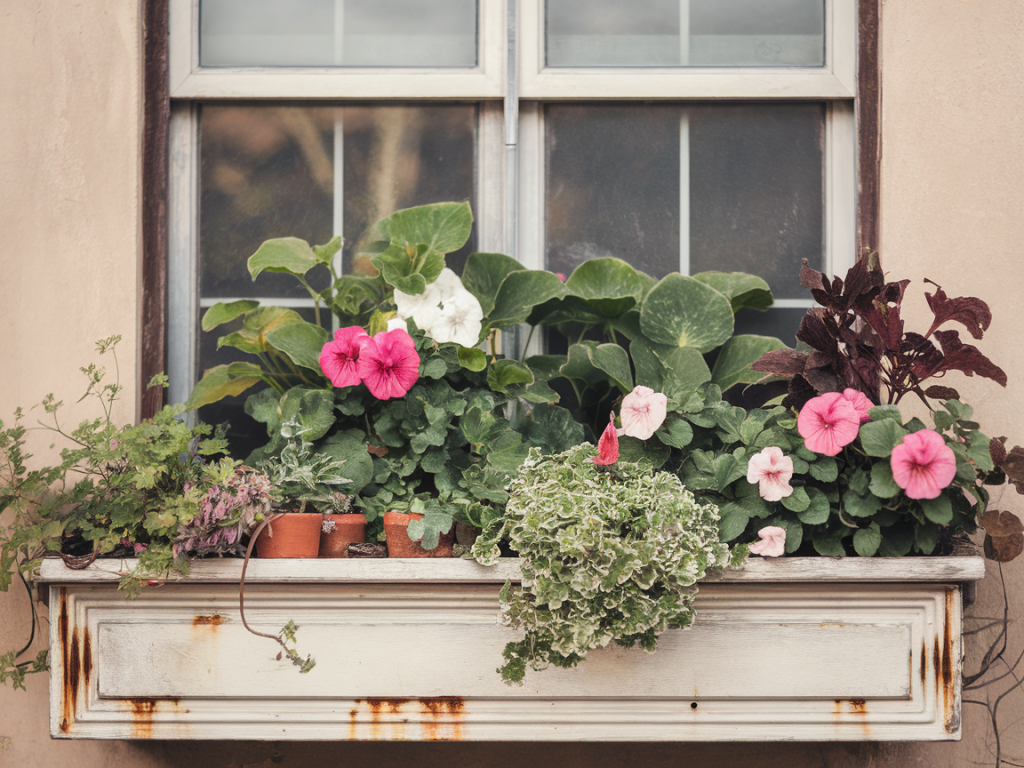
I have a small south-facing window box that gets glorious light for most of the day and, if I’m honest, a tendency to dry out fast. I wanted something that would look cheerful all summer, survive my habit of doing a single, weekly watering, and be forgiving when life gets busy. Over a few seasons of tinkering, I’ve settled on a mix of plants and a simple routine that gives me colour, scent, and texture without demanding fuss. Here’s what I plant — and how I care for it — so that a tiny window box can thrive on one weekly watering.
The basic idea: choose drought-tolerant, sun-loving plants
South-facing means warm and bright. That’s perfect for plants that love sun and can handle the soil drying out between waterings. I aim for a mix of:
- Shallow-rooted, drought-tolerant herbs (e.g. thyme, rosemary, dwarf sage)
- Sun-loving, low-water perennials (e.g. sedum, lavender)
- Annuals/edibles that cope well with warmth (e.g. nasturtiums, marigolds, dwarf pelargoniums)
- Trailing plants for interest (e.g. trailing succulents, ivy-leaved geraniums)
This combo gives colour and scent, and the different root depths and textures make the box look fuller without needing daily attention.
Plants I recommend for a tiny south-facing window box
Below is a compact table I use as a quick reference when I go plant shopping. It lists reliable choices for one-week watering rhythms.
| Plant | Why it works | Notes |
|---|---|---|
| Thyme (Thymus spp.) | Fragrant, compact, drought-tolerant | Trim after flowering to keep tidy |
| Rosmarinus/Salvia rosmarinus (dwarf rosemary) | Woody, very drought-hardy, evergreen scent | Protect from harsh winter winds if your window is cold |
| Lavandula angustifolia (dwarf lavender) | Smells wonderful, loves sun, drought-tolerant | Needs excellent drainage |
| Sedum 'Dragon's Blood' (or other sedums) | Succulent leaves, survives dry spells, low care | Great for texture and colour |
| Geraniums (Pelargonium peltatum, ivy-leaved) | Bright flowers, tolerates warmth and irregular water | Deadhead occasionally for more blooms |
| Nasturtium (Tropaeolum) | Edible flowers, trailing, sun-loving | Don't over-fertilise — they prefer poorer soils |
| Gazania | Bold daisy-like flowers, sun and drought-loving | Closes in shade or late afternoon |
| Small succulents (e.g. sempervivum, echeveria) | Very low water needs, sculptural | Best in pockets or small groups where soil is very free-draining |
Soil, drainage and the one-week watering plan
The single most important thing for a one-week watering schedule is good drainage. If water sits in the box the plants will suffer and roots will rot. Here’s my approach:
- Choose a well-draining compost: I use a multi-purpose compost mixed with coarse sand or grit (about 70% compost, 30% grit) or a specialist Mediterranean/succulent mix if I have succulents. Brands like John Innes or a reputable local mix work well.
- Ensure drainage holes: My box always has clear holes and a layer of small crocks or broken terracotta at the bottom to speed drainage.
- Add a moisture-retaining element: For long sunny spells I tuck a single water-retaining chip or a small gel granule near the roots of the herbs; but I avoid heavy water-retainers for succulents.
- Top with mulch: A thin layer of decorative gravel or broken clay helps reduce surface evaporation and keeps the top soil from crusting.
How I water once a week and make it effective
Weekly watering is about quality, not quantity. I water deeply rather than sprinkling. A thorough soak encourages roots to grow deeper and makes plants more resilient between waterings.
- Use a watering can with a long spout to direct water to the soil, not the foliage. This reduces fungal problems and evaporation.
- Water slowly until you see excess water come out of the drainage holes — that tells me the whole rootzone is moistened.
- On very hot spells I might add a second, slightly smaller soak mid-week, but usually one deep watering suffices.
- In autumn and winter I reduce frequency. Many of these plants go a bit dormant and will resist frequent watering.
Companion planting and spacing
I like to think of my window box in mini-ecosystem terms: a grounding plant (lavender or rosemary), a floral focal point (geranium or gazania), a trailing element (nasturtium, trailing sedum), and a filler (thyme or small sedum). Give each plant the space noted on its label — crowded plants will need more frequent watering and will compete for nutrients.
Feeding, upkeep and seasonal tips
A light feed once a month during the growing season keeps flowers happy. I use a dilute, balanced liquid feed (a brand like Tomorite or Miracle-Gro in diluted strength) or an organic seaweed feed if I want something gentler.
- Deadhead: Remove spent flowers from geraniums and gazanias to encourage more blooms.
- Trim herbs: Regular snips of thyme and rosemary keep them compact and productive.
- Watch for pests: Aphids and whitefly can appear in warm windows. A gentle spray of soapy water or an insecticidal soap usually takes care of them. I keep a small bottle of soft soap in my kitchen for quick action.
- Winter care: Move more tender plants (pelargoniums) indoors if a hard frost is expected, or provide a frost cloth. Drought-tolerant plants like sedum and thyme usually manage outside with minimal fuss.
Design tips for a tiny box
Because the space is small, I focus on contrast and repetition rather than too many different species. A palette of two or three main colours (soft lavender, pale pink, vivid coral) feels cohesive. I often plant three to five specimens total — a small lavender, a trailing geranium, a thyme, and a sedum make a satisfying group.
I also use visual tricks: a low, pale-coloured border to reflect light into the room, and a single decorative element (a small ceramic bird or a painted pebble) to catch the eye when I’m making tea and sketching. These tiny rituals make the window box feel like part of a gentle routine rather than a chore.
What I keep learning
Even after a few seasons, I still experiment. One year I tried a water-retaining mat and the plants were too lush — they preferred to be a bit leaner. Another year I swapped rosemary for a compact lavender and loved the perfume that drifted in when I opened the window in the evening. The joys of a small window box are that adjustments are simple, and small changes make a noticeable difference.
If you try a south-facing setup on a one-week watering schedule, start with forgiving plants, use well-draining soil, water deeply, and enjoy the way a tiny green corner can brighten your day. If you want, tell me what you plant — I love hearing how readers adapt ideas to their own nooks and routines.