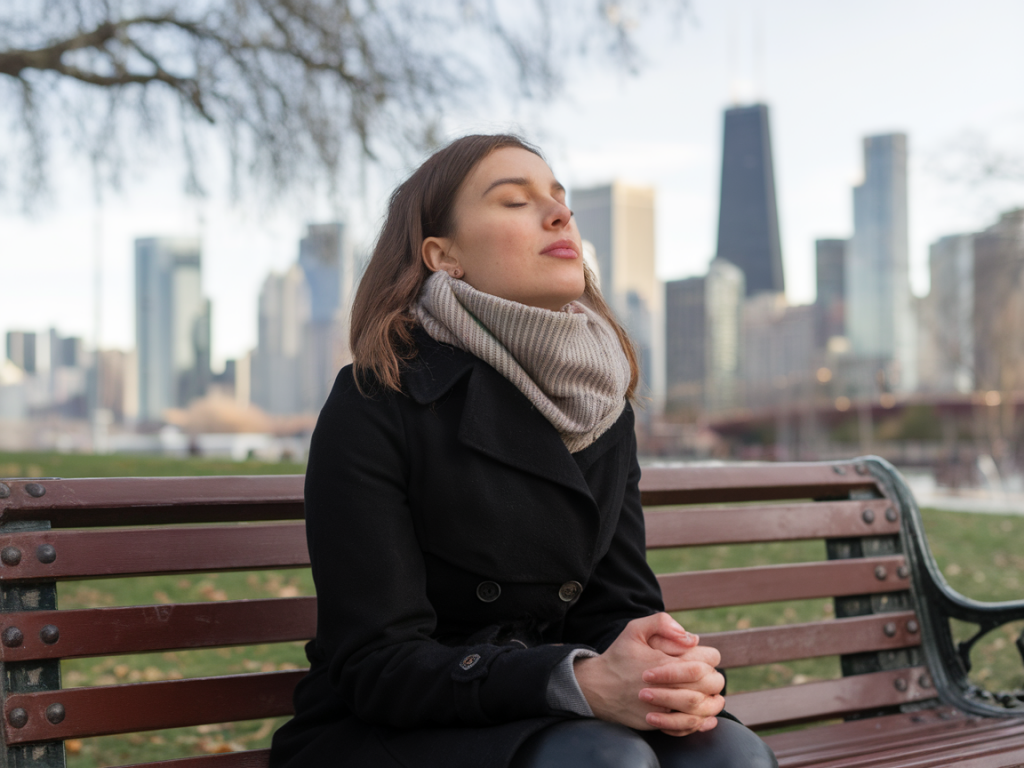
I remember the first time I noticed how much calmer I felt after a single deliberate breath. I was standing in a messy kitchen, a newborn pasta sauce bubbling on the stove and a list of errands growing longer by the minute. A quick, slow inhale and a long, steady exhale — and suddenly the tightness behind my eyes eased enough for me to think clearly again. Since then I’ve turned short breathing breaks into a tiny, reliable refuge in busy days. They’re simple, portable, and — best of all — they work fast.
Why short breathing breaks help so quickly
When anxiety spikes, your body goes into a heightened state: fast heart rate, quick chest breaths, and a flood of thoughts. Deliberate breathing nudges the nervous system back toward the parasympathetic state — the “rest and digest” mode — by slowing the heart rate and activating the vagus nerve. Research supports what I’ve experienced: even 60–90 seconds of focused breathing can lower heart rate and reduce feelings of panic.
But the magic is as much psychological as physiological. A breathing break is a small, kind act you give yourself in the middle of a stressful day. It says, “I can pause.” That tiny permission can break a spiralling thought loop and create enough space for a different choice.
My favourite quick breathing techniques (and how to do them)
Below are the short practices I go to most often. Each one takes between 30 seconds and three minutes, so they fit into crowded mornings or calm evenings alike. Try them standing, sitting, or lying down — whichever feels easiest.
- Box breathing (30–60 seconds): Inhale for 4, hold for 4, exhale for 4, hold for 4. Repeat 3–4 times. This rhythm gives structure and slows everything down.
- 4-6-8 breath (60–90 seconds): Inhale quietly for 4 counts, breathe out gently for 6, then exhale for 8. The extended exhale is what signals the body to relax.
- One-minute grounding breath: Breathe in for a slow 3, breathe out for 3, and on each outbreath name one of the senses: “I hear… I see… I feel…” It brings attention back to the present.
- Belly breathing (2–3 minutes): Place a hand on your belly, breathe in so the hand rises, breathe out so it falls. Count each inhale and exhale to keep the rhythm calm and steady.
- Pursed-lip exhale (30–60 seconds): Inhale normally, then breathe out slowly through pursed lips (like blowing out a candle) for twice as long as the inhale. This technique helps if you feel breathless or panicked.
How to build them into your day without feeling like another chore
The trick is pairing breathing breaks with small, existing parts of your routine. I don’t like adding “one more thing” to my to-do list, so I anchor breathwork to moments that already happen.
- Morning anchor: after I make my bed, I stand at the window for one box-breathing set. It takes less than a minute and feels like a tidy start.
- Work anchor: I pair a breathing break with the Pomodoro timer. When the timer rings, instead of instantly checking my phone, I do a one-minute grounding breath.
- Transition anchor: I use a breath as a buffer between tasks — for example, before opening a new email or before answering the door. It creates a small reset.
- Evening anchor: right before I start cooking dinner, I do belly breathing for two minutes to shift out of the day’s noise and into something calmer.
Using reminders and subtle props
Gentle cues make new habits stick. I use three simple tools:
- Visual cue: a small ceramic bowl on my kitchen counter. Every time I see it, I take one slow breath. It’s pretty and it works as a prompt.
- Phone reminder: I set two non-intrusive reminders using the iPhone Clock or a basic habit app (I like Streaks for simplicity). One in the morning, one in the afternoon — nothing constant, just gentle nudges.
- Pomodoro timer: For focused work I use a 25/5 rhythm. In the five-minute break I’ll often do a quick breathing cycle instead of scrolling social media.
What to expect — and what’s realistic
Breathing breaks aren’t a cure-all. They won’t erase chronic anxiety overnight, but they do lower the intensity of acute moments and help you feel more in control. At first you might find your mind racing during the exercise — that’s normal. The goal isn’t to stop thinking, it’s to anchor attention to the breath. Over weeks, these short practices compound into better baseline calm, clearer thinking, and more resilience.
When to seek more support
If anxiety feels persistent, overwhelming, or interferes with daily life despite regular breathing breaks, please consider reaching out for professional support. Breathing techniques are a helpful tool, but they work best alongside therapy, medication when needed, or support groups. I’ve found therapy incredibly useful on days when breathing alone wasn’t enough — it added deeper coping tools and a space to process things more fully.
A simple one-week try-it plan
| Day | Practice | Timing |
|---|---|---|
| Mon | Box breathing (3–4 cycles) | After making your bed |
| Tue | One-minute grounding breath | Mid-morning break |
| Wed | Belly breathing (2 minutes) | Before lunch |
| Thu | Pursed-lip exhale (1 minute) | When feeling rushed |
| Fri | 4-6-8 breath (2 cycles) | End of workday |
| Sat | Choice of any technique | After a short walk |
| Sun | Combination: belly breathing + grounding | Before cooking dinner |
These short practices are the kind of small, steady rituals I love — they don’t demand perfection, just a few breaths of attention. If you try them, I’d love to hear which one helped most for you and where you like to fit them into your day. Small changes, repeated, can quietly restore a lot.