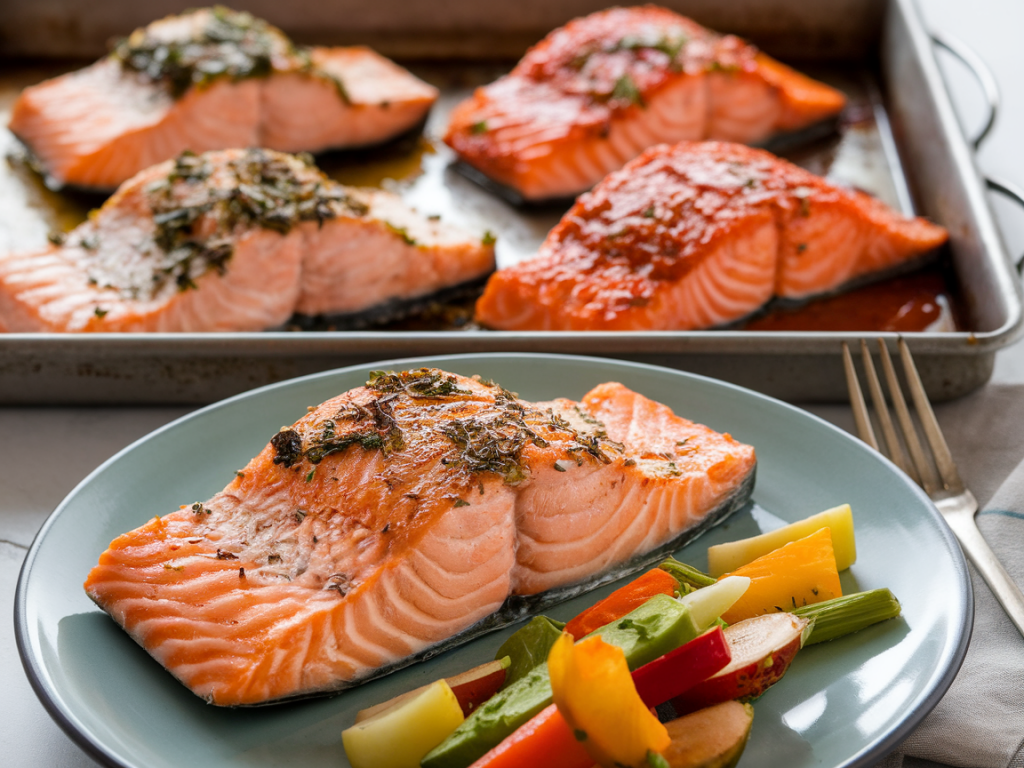
I often roast a tray of salmon when I have a spare hour on a Sunday — the kind of small, sensible ritual that makes weekday lunches feel effortless. One tray of flaky, tender salmon can be the base for so many different meals: bright salads, warming bowls, simple sandwiches and more. With two easy sauces (one citrus-herb and one creamy dill-yogurt), you can transform the same protein into four distinct weekday lunches that feel fresh and varied.
Why roast a tray of salmon?
For me, it’s about convenience, flavour and a little bit of nourishment that lasts. Roasting on a single tray means easy prep, minimal washing up and consistent results. Salmon keeps well in the fridge for 2–3 days, and its fat helps it stay moist, even when repurposed into different dishes. Plus, cooking once and eating multiple ways helps reduce food waste — a small win I really appreciate.
What you’ll need
Here’s a short list of essentials so you can follow along. I prefer simple, good-quality ingredients — a little care goes a long way.
- 1 large tray (about 600–800g) salmon fillets, skin on or off as you prefer
- Olive oil, salt and pepper
- 1 lemon and 1 orange (for zest/juice)
- Fresh herbs: parsley and dill (or a mix)
- Plain yoghurt (Greek or natural)
- Mayonnaise (optional, to loosen dressings)
- Mustard, honey, capers (optional pantry boosters)
- Mixed salad leaves, cooked grains (rice/quinoa), wraps, rye bread, pickles, steamed veg — see lunches below
Roast tray salmon — my simple method
Preheat the oven to 200°C (fan 180°C / 400°F). Line a tray with parchment. Drizzle the salmon with olive oil, a good pinch of salt and freshly ground pepper. Scatter some lemon zest and a few slices of lemon across the fillets. Roast for 12–16 minutes depending on thickness: you want the flesh to flake easily but still be moist.
Once it’s out, I let it rest for 5 minutes, then use a fork to flake it into bite-sized pieces. Leave a few larger slices if you want a chunkier texture for sandwiches.
The two sauces (make-ahead, versatile)
Both sauces keep well in the fridge for 3–4 days. They change the character of the salmon entirely.
Citrus-Herb Dressing
- Juice of 1 lemon and 1 teaspoon orange juice
- 2 tablespoons olive oil
- 1 tablespoon chopped parsley
- 1 teaspoon Dijon mustard
- Salt and pepper to taste
- Optional: 1 teaspoon capers, chopped
Whisk together and adjust to brightness with more lemon if desired.
Creamy Dill-Yogurt
- 150g Greek yoghurt
- 1 tablespoon mayonnaise (optional, for silkiness)
- 2 tablespoons chopped fresh dill
- 1 small garlic clove, grated or finely minced
- Salt, pepper and a squeeze of lemon
Mix thoroughly. If it’s too thick, loosen with a little milk or a teaspoon of olive oil.
Lunch idea 1 — Bright salmon & grain bowl (citrus-herb)
This is my go-to when I want something filling but fresh. Use cooked quinoa, brown rice or a mix of grains.
- Base: 1–1.5 cups cooked grain
- Veg: roast sweet potato cubes or steamed broccoli, plus a handful of mixed salad leaves
- Protein: 120–150g flaked salmon
- Dress: drizzle with the citrus-herb dressing
- Finish: scatter pumpkin seeds or toasted almonds for crunch
Tip: pack the dressing separately if you’re taking this to work to avoid a soggy bowl.
Lunch idea 2 — Creamy salmon lettuce cups (dill-yogurt)
These feel light and are ready in minutes. I use little gem or butter lettuce leaves as cups.
- Take 100–120g flaked salmon and fold into 2–3 tablespoons creamy dill-yogurt
- Spoon into washed lettuce leaves
- Add sliced radish, cucumber ribbons and a squeeze of lemon
- Serve with a slice of grainy bread if you want more substance
They’re fresh, quick, and perfect for a warm-day lunch.
Lunch idea 3 — Salmon open sandwich with pickled cucumber (citrus-herb)
An open sandwich feels a little celebratory without fuss.
- Toast a slice of rye or sourdough
- Spread a thin layer of butter or cream cheese
- Top with larger pieces of roasted salmon
- Drizzle the citrus-herb dressing and add quick-pickled cucumber or gherkins
- Finish with cracked black pepper and a few dill fronds
Quick-pickled cucumber: thinly slice cucumber and toss with a splash of vinegar, pinch of sugar and salt — leave for 10 minutes.
Lunch idea 4 — Warm salmon & veg tray bake bowl (dill-yogurt)
For a comfort-style lunch I reheat some steamed or roasted vegetables and combine with salmon and the creamy sauce.
- Warm 120–150g flaked salmon gently in a pan with a teaspoon of olive oil (don’t overcook)
- Stir through steamed green beans, cherry tomatoes and new potatoes or cauliflower rice
- Fold in a dollop of the dill-yogurt sauce to coat
- Top with lemon zest and extra dill
This feels homely and is great for colder days.
Storage, reheating and safety tips
- Fridge life: Store cooked salmon in an airtight container for up to 2–3 days.
- Reheating: Gently reheat in a low oven (150°C/300°F) for 8–10 minutes, or warm briefly in a pan. Microwave on low power in short bursts to avoid drying out.
- Serving cold: Flaked cold salmon is delicious in salads and sandwiches. Keep sauces separate until serving for best texture.
- Freezing: I don’t usually freeze roasted salmon for lunches — texture changes — but you can freeze in a saucy dish (like a curry) for up to 1 month.
Easy variations and swaps
- Swap salmon for tuna, mackerel or leftover roast chicken if you prefer.
- Add beans (white beans, chickpeas) to any bowl for extra fibre and budget-friendly protein.
- Turn the citrus-herb dressing into a vinaigrette by swapping yoghurt for more olive oil and a splash of white wine vinegar.
- Use store-bought sauces—such as supermarket tzatziki or a jarred lemon-herb dressing—if you’re short on time. I sometimes use a spoonful of mayonnaise mixed with lemon and dill when I haven’t got yoghurt.
Quick shopping checklist (table)
| Salmon | 600–800g fillets |
| Dairy & pantry | Greek yoghurt, mayonnaise (optional), olive oil, Dijon mustard |
| Citrus & herbs | Lemon, orange, parsley, dill |
| Grains & bread | Quinoa/rice, sourdough or rye |
| Veg | Mixed leaves, cucumber, radish, broccoli/sweet potato |
Questions I often get asked
Can I use frozen salmon? Yes — thaw thoroughly in the fridge before roasting and pat dry. The texture will be similar.
How much salmon per lunch? About 100–150g per adult serving is a good guideline.
Can I make the sauces vegan? For a plant-based version, swap yoghurt for a dairy-free yoghurt and use mashed avocado or tahini as a creamy base.
Try this approach next time you roast salmon: make the two sauces while the fish rests, flake the tray into portions, and plan two different lunches from day one. It’s a small habit that saves time and keeps your weekday meals feeling thoughtful rather than monotonous.