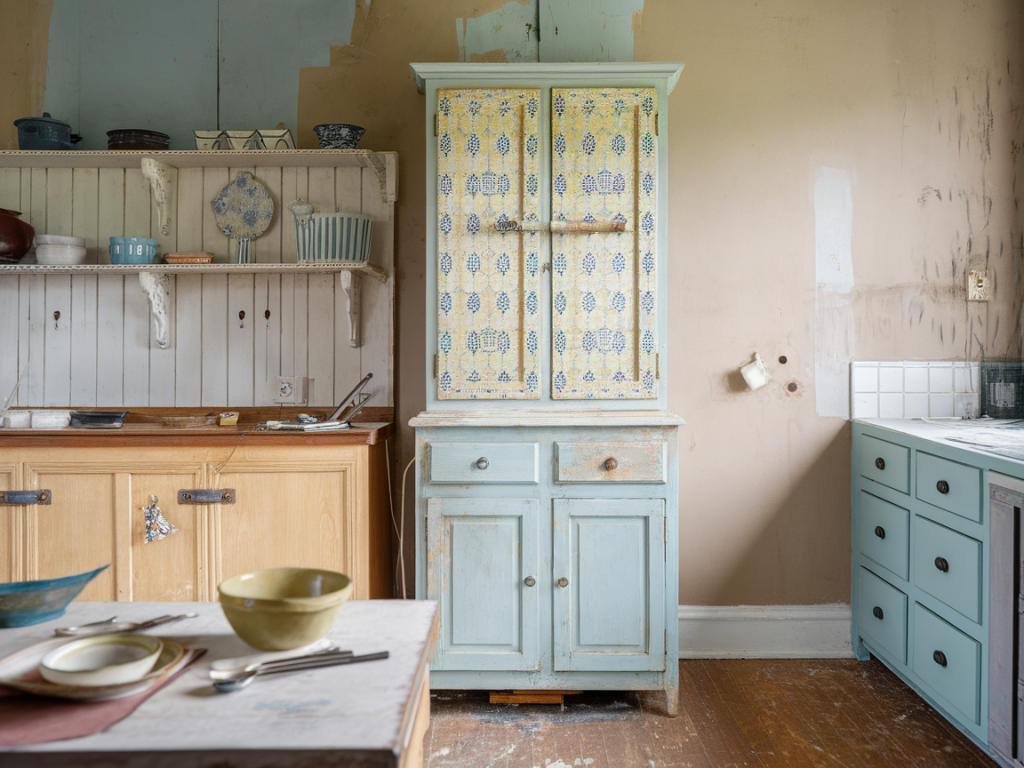
I recently gave my kitchen a small but satisfying refresh: faded painted cabinets brought back to life using Annie Sloan Chalk Paint in a beginner-friendly makeover that cost me about £60. It’s the kind of project that felt achievable on a weekend, even with limited tools and no previous experience. I’m sharing everything I learned — the easy wins, the things I’d do differently next time, and practical tips so you can try this at home without stress.
Why I chose chalk paint (and why it’s great for beginners)
My cabinets had the sort of tired, sun-faded finish that makes a kitchen feel older than it is. I considered full spray repainting, but that felt too involved. Annie Sloan Chalk Paint is forgiving: it adheres to most surfaces with little sanding, dries quickly, and gives a beautiful matte finish that feels soft and modern. For beginners, the biggest advantages are easy application and the ability to hide small mistakes — plus the finish takes waxing or an easy topcoat that you can apply without specialized equipment.
What I bought (and kept within £60)
Being honest about budget helped me make choices that felt realistic. I focused on the essentials: one small tin of paint, a wax/topcoat, a brush, and a few disposable items. Here’s the breakdown of what I bought (prices approximate):
| Item | Cost |
| Annie Sloan Chalk Paint (120ml) | £24 |
| Annie Sloan Soft Wax (small tin) | £12 |
| Chalk paint brush (medium) | £10 |
| Sandpaper (120–220 grit) & cleaning cloths | £5 |
| Disposable gloves, masking tape | £4 |
| Total | £55 |
I already had a small sponge, a flat-head screwdriver (for removing knobs), and old sheets to protect floors — so if you need those, your cost will be slightly higher.
Prep work: small steps that make a big difference
Prep is half the battle and it doesn’t have to be fussy. I removed all knobs and doors I could manage (label them with a piece of masking tape so you know where they go). Then I cleaned every surface thoroughly — grease is the enemy of a good finish. I used boiling water with a little dish soap and then wiped down with a degreaser in stubborn spots.
I did a very light sand on high-gloss or rough spots using 120 grit to give the paint something to grip. If your cabinets are matte or already painted with a chalky finish, you can probably skip sanding altogether. Dust off with a tack cloth or damp microfibre so the surface is pristine before you paint.
Painting technique: two coats and a patient hand
I mixed the chalk paint gently (don’t shake it hard; stir) and applied the first coat with smooth, even strokes following the grain. Chalk paint produces lovely brush strokes that look intentional, so don’t worry about perfection. Two tips that helped me:
I let the first coat dry for about 45 minutes (Annie Sloan’s paint dries quickly, but drying time varies by temperature and humidity). Then I lightly sanded with 220 grit to knock down any bristles or dust nibs and applied a second coat. The finish after two coats looked rich and even.
Sealing: wax vs acrylic lacquer
I chose Annie Sloan Soft Wax because it’s easy to apply by hand and gives that soft, velvety finish I love. Wax is more forgiving for a hand-painted, vintage look and can be touched up easily. However, if your cabinets need to withstand heavy kitchen use (lots of wiping, splashes), consider an acrylic or polyurethane topcoat for extra durability.
To apply wax: dip a lint-free cloth or wax brush into a small amount, rub it on in circular motions, then buff with a clean cloth. Don’t skimp on buffing — that’s what brings out the sheen and protects the surface. I left doors off for 24 hours to cure before rehanging; full cure takes a few weeks, so be gentle with heavy scrubbing at first.
Small styling upgrades that finish the look
New paint alone transformed the cabinets, but I added a few low-cost details that made the space feel deliberately refreshed:
Common questions I had (and answers I learned)
Do you need to prime? In most cases with chalk paint, no. If you’re painting over raw wood with tannin-rich stains, or a very dark surface you want to cover in a lighter shade, consider a bonding primer.
How many doors can 120ml cover? It depends on size and coverage — in my experience, a 120ml tin covered about 4 standard cupboard doors with two light coats. If you have a big kitchen, plan on larger tins.
Can I paint inside cabinets? Yes — remember to de-grease and allow extra drying time. Use a harder-wearing topcoat if the inside will be subject to frequent wiping.
What about color choice? I picked a soft neutral that would brighten the room without feeling cold. Dark colours look dramatic but show dust and fingerprints more easily. Test a small patch first if you’re unsure.
Troubleshooting
If you get brush marks: gently sand with 220 grit once dry and recoat.
If the paint chips: likely not enough cleaning or wax; re-clean the area, scuff with sandpaper, and reapply paint and wax.
If the finish feels sticky: you’ve applied too much wax. Buff more vigorously and wait longer between layers.
Doing this on a budget forced me to be practical but also playful. Chalk paint gave a surprisingly professional-looking result without the time, expense, or headache of stripping, priming, and spray-painting. If you try it, take photos of your before and after — the change feels that good. And if something doesn’t go perfectly, remember: chalk paint is forgiving, and small tweaks can usually fix it.