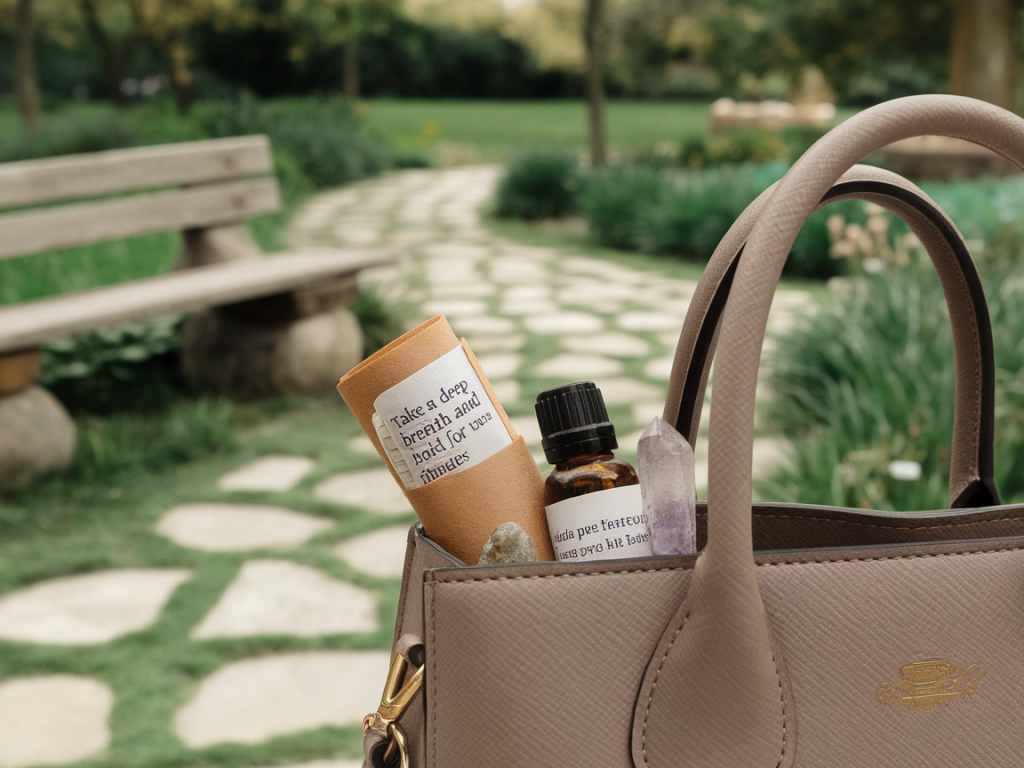
I carry a small kit in my handbag now — a handful of quiet tools that help me pause, breathe, and steady myself when a panic wave arrives. It started after a few anxious outings where I felt everything rush too fast: breath shallow, mind loud, hands trembling. I wanted something simple, discreet and kind to reach for. Over time I learned what fits in a purse and what actually works in the moment. Below I’ll show you how to build a two-minute breathing-break kit you can tuck into any bag and use to calm panic within minutes.
Why a pocket-sized kit?
Panic and high anxiety can feel overwhelming because they often come without warning. A brief, well-practiced intervention can interrupt the cycle. I aim for two minutes because that’s short enough to be realistic in a busy day and long enough to activate the parasympathetic nervous system when used correctly. Having a small, familiar set of items makes it easier to take that pause — you don’t have to think about what to do, you simply reach for the kit and follow what you’ve practiced.
What to include (and why)
My kit is tiny and intentionally low-tech. The items are chosen to help with breath control, grounding through the senses, and gentle distraction. Here’s what I keep in mine:
- Breathing card — a folded cardstock rectangle with a simple two-minute script. I keep a tactile cue to guide me through timed inhales and exhales so I don’t have to count in my head.
- Mini inhaler or essential oil roller — a 2–5 ml roller with lavender or sweet orange. The scent is not a fix-all, but a familiar aroma can steady you and give your brain a soft signal to pause. I use a neat glass roller from Neom or a small doTERRA roller.
- Tactile object — a smooth worry stone, a tiny wooden bead, or a soft fabric square. Touch anchors attention to the present and can ease hand tremors.
- Sweet or mint — a small lozenge, piece of dark chocolate or peppermint. Oral stimulation offers immediate sensory input and a tiny pleasure that interrupts catastrophic thinking.
- Noise cue (optional) — earbuds with a short playlist of calm sounds (I keep a 2-minute track of slow piano or ocean in a playlist named “Quick Calm”). If I’m in public I use one earbud so I can stay aware of my surroundings.
- Paper with emergency phrases — a short list of phrases I can say to myself (or out loud) like “This will pass,” “Two minutes,” and “Breathe in for 4, out for 6.”
How to make the breathing card
The breathing card is the heart of the kit. Make it by writing a very short, clear script on a folded piece of card — the kind you can easily slip into a small wallet. Here’s the version that works for me; feel free to adapt:
- Step 1 (30 sec): Sit if you can. Place one hand on your belly. Inhale gently through the nose for a count of 4. Hold for 1.
- Step 2 (60 sec): Exhale slowly through pursed lips for a count of 6. Repeat this cycle for 6 rounds.
- Step 3 (30 sec): Return to normal breathing. Notice 3 things you can see, 2 things you can touch, 1 thing you can hear.
I keep the counts conservative — shorter inhales, longer exhales — because that pattern nudges the body out of fight-or-flight. Practice with this card at home a few times so the directions become familiar; in panic, familiarity is the friend that helps you follow the steps.
Using the kit in two minutes: a simple routine
This is what I do when my heart speeds up and everything feels urgent. It fits a handbag moment and takes under two minutes when you’ve practised.
- Reach into your bag and take out the card and tactile object. (This action alone is purposeful and calms the mind.)
- Read the card. Sit if you can. Place a hand on your belly.
- Follow the inhale-for-4, exhale-for-6 pattern for about a minute. Use the tactile object to keep your attention in your hand — notice its temperature, texture, and weight.
- Roll the essential oil under your nose or on your wrists if it helps. Slowly suck a mint or chocolate piece as you return to normal breathing.
- Finish with the grounding prompt on the card (3 things you see, 2 you can touch, 1 you can hear).
Practice makes it faster and more effective
I treat the kit like a small habit. I don’t wait for panic to practice. Once or twice a day, I take 90 seconds at my kitchen table and run through the card. Practising does two important things: it makes the sequence automatic and it proves to my nervous system that the exercise is safe. Over time two minutes moves from being a last resort to a go-to reset.
Where to buy or how to DIY
Almost everything fits in a tiny zipper pouch or an old mint tin. You can find portable essential oil rollers on Etsy, from Neal’s Yard Remedies, or in the travel-sized section of Boots. Small tactile stones and worry beads are available online or in craft shops. If you prefer a ready-made option, look at brands like Calmigo (a small device that helps regulate breath) or the Huggaroo mini heat wrap for a little warmth on the go — though I keep those at home rather than in my bag.
Troubleshooting: what if it doesn’t work right away?
Sometimes the kit doesn’t feel like enough, and that’s okay. Panic doesn’t follow a single rulebook. If the breathing feels hard, shorten the rounds to three or try box breathing (inhale 4, hold 4, exhale 4, hold 4). If scents make you lightheaded, skip the roller. If crowds make breathing difficult, try a silent counting method: count each slow exhale to six while a hand presses gently to your sternum to feel the rhythm. If you often need more support, pair the kit with a trusted friend who knows your signs, or speak with a therapist — the kit is a complement to other care, not a replacement.
Keep it personal
One of the best things about this kit is that it becomes yours. A particular tea sachet, a pressed flower, a favourite mint — these small personal touches create a safe ritual. I like to change the scent with the seasons and replace the chocolate with a single boiled sweet when I need something slower to dissolve. Over time, the bag routine becomes as reassuring as a familiar chair.
If you try building a kit, tell me what you put in it and how it fits into your day. I always enjoy hearing how a little collection of things can make a hard moment feel more manageable.