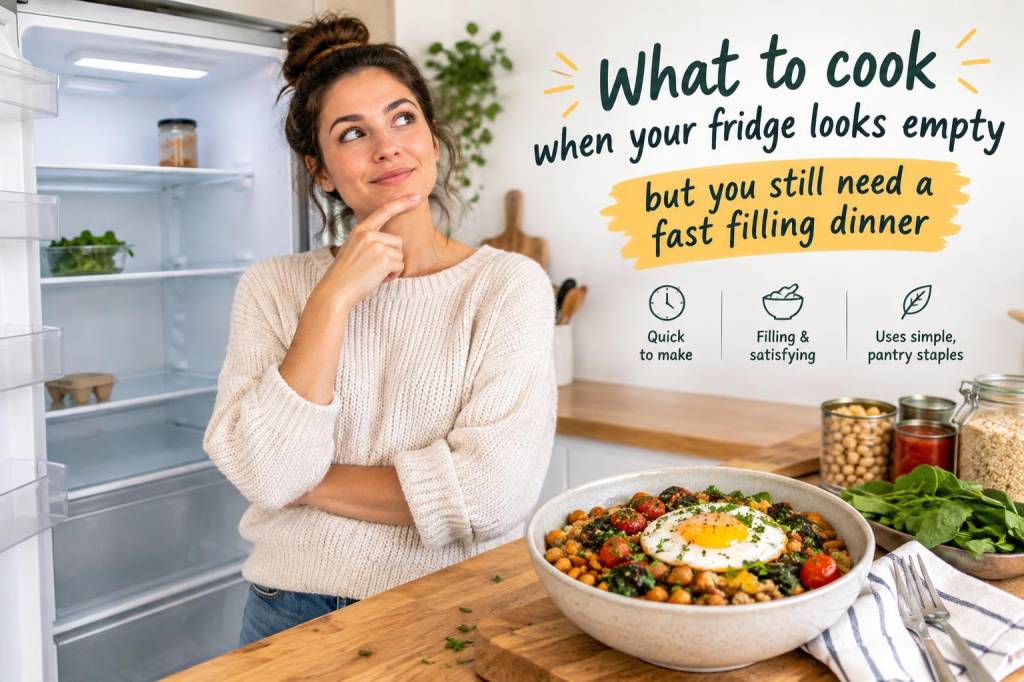
When my fridge looks nearly empty, I stop treating dinner like a grand cooking project and start treating it like a small rescue mission. I open the door, take one honest look at what is left, and build a meal from whatever is still useful. Some evenings that means a lonely carrot, half a onion, a wedge of cheese, a jar with just enough sauce clinging to the sides, and a few eggs waiting in their carton. It may not look inspiring at first, but I have learned that a sparse fridge can still produce a meal that feels warm, filling, and genuinely satisfying.
What I want most in that moment is not perfection. I want something fast, comforting, and solid enough to keep everyone happy without a special shop run. I also want a method that saves money and reduces waste, because an empty-looking fridge often hides more potential than we notice. Once I started cooking this way, I became much less stressed about busy evenings. I stopped seeing an almost-empty fridge as a problem and started seeing it as a prompt to be resourceful.
First, I take stock without overthinking it
My first move is always to lay out what I have and sort it into a few simple groups: vegetables, protein, starch, dairy, sauces, and extras. That little pause helps me see patterns. A few vegetables plus eggs can become a frittata. Beans plus rice can become a bowl. Pasta plus a small amount of cheese, butter, or tomato paste can feel much richer than it sounds. Bread can turn into toast, croutons, or a quick sandwich supper. Even a nearly empty crisper drawer can become dinner once I stop expecting a full recipe to appear.
I also check the freezer, because frozen food often saves a tired evening. A handful of frozen peas, spinach, sweetcorn, or chopped onions can change a meal immediately. Frozen bread, frozen herbs, and leftover cooked grains are worth their weight in gold on these nights. I never underestimate a half bag of frozen vegetables, because they can stretch a meal without much effort.
My favorite formula is one starch, one protein, one vegetable, and one sauce
When I am stuck, I use a simple formula. I choose one starch to make it filling, one protein to give it substance, one vegetable for freshness, and one sauce or seasoning to tie everything together. That structure helps me decide quickly, even when my fridge contents are random.
For example, I might have pasta, eggs, a few mushrooms, and parmesan. That becomes a fast pasta dish with softly cooked eggs and sautéed mushrooms. Or I might have rice, a tin of beans, spinach, and salsa. That becomes a bowl that feels much more complete than the ingredients suggest. If I have potatoes, cheddar, and a little milk, I can turn them into a quick gratin, mash, or loaded baked potato supper. If I have tortillas, leftover cooked chicken, and a bit of cheese, I can make quesadillas in minutes.
This formula works because it keeps me from wandering around the kitchen making complicated decisions. I do not need a perfect recipe when I am tired. I only need a structure that helps me combine what is already there.
Eggs are often my emergency dinner hero
If I had to pick one ingredient that saves me again and again, it would be eggs. They are quick, affordable, and flexible enough to turn into several different dinners. Scrambled eggs with toast and leftover vegetables make a fast supper. A frittata can use almost anything: potatoes, onions, spinach, peppers, tomatoes, courgettes, cheese, or herbs. Shakshuka works beautifully when I have a little tomato sauce and a few spices. A fried egg on rice or noodles can make a simple bowl feel much more complete.
I like eggs because they make a fridge look less empty than it is. Even if there are only a few stray ingredients, eggs can bind everything together and create a meal that feels deliberate. When I add a little cheese or a spoonful of pesto, dinner goes from basic to comforting in seconds.
Canned food is not a last resort in my kitchen
I used to think of tins and jars as backup food, but now I see them as dinner builders. A can of chickpeas, beans, tuna, tomatoes, lentils, or coconut milk can save an evening with very little effort. Canned food brings texture, protein, and depth to meals that might otherwise feel thin.
Chickpeas can be warmed with garlic, paprika, and spinach, then served over toast or rice. Tuna can be mixed with pasta, lemon, a little mayonnaise, and peas. Lentils can be simmered with tomato paste, onion, and herbs for a quick sauce. Beans can be mashed with butter and served in wraps, or stirred into soup to make it heartier. Even a basic tin of tomatoes can become the base of a pasta sauce, soup, or shakshuka.
When my fridge looks empty, I remind myself that dinner does not need to come from fresh ingredients alone. A well-stocked cupboard is part of a practical kitchen, and I have learned to value it much more than I used to.
My quickest filling dinners when ingredients are scarce
Some meals appear so often in my kitchen that I can almost make them without thinking. They are the dishes I reach for when time is short and the fridge is looking bare.
- Fried rice with any leftover rice, one egg, frozen vegetables, soy sauce, and a little sesame oil if I have it
- Pasta with pantry sauce using garlic, olive oil, tomato paste, chilli flakes, and parmesan or cheddar
- Bean toast with white beans or baked beans, melted cheese, pepper, and herbs
- Omelette supper with eggs, cheese, herbs, and whatever vegetables need using up
- Quesadillas filled with beans, leftover meat, or vegetables and a little cheese
- Soup plus bread made from onions, carrots, potatoes, lentils, or any soft vegetables at hand
- Tray bake with potatoes, onions, sausage, halloumi, or vegetables roasted together until crisp
I think of these meals as low-pressure cooking. They do not ask for much, but they give a lot back. They are warm, practical, and easy to adjust depending on what is left.
Seasoning matters more than quantity
One thing I have noticed is that a nearly empty fridge often needs better seasoning, not more ingredients. A small meal can feel generous if it is salted properly and finished with something bright. Lemon, vinegar, mustard, chilli flakes, soy sauce, herbs, garlic, and black pepper can make a huge difference. Even a little butter at the end can make simple vegetables or pasta feel fuller and more comforting.
I also like to keep a few flavour boosters within reach: pesto, tomato paste, harissa, curry paste, mustard, pickles, and stock cubes. A spoonful of any one of these can make a plain mix of leftovers taste intentional. This is often what turns a scrappy dinner into something I would actually make again.
How I decide what to make in under five minutes
When I need dinner quickly, I ask myself a few questions. Do I need something on toast, in a bowl, or on a plate? Do I have enough protein already, or do I need eggs, beans, or cheese? Is there a vegetable that needs using before it softens too much? Do I have a grain, bread, or pasta to make it filling?
That little decision tree saves me from staring into the fridge for too long. I do not chase inspiration. I narrow the choice. If I have bread, I lean toward toast, sandwiches, or a quick melt. If I have rice, I lean toward a bowl. If I have pasta, I look for a sauce or a quick pan of vegetables. If I have potatoes, I think about mash, hash, or a tray bake. The shape of the meal often reveals itself once I stop asking for a full recipe.
A small table I use when I need a dinner idea fast
| What I find | What I make | What makes it filling |
|---|---|---|
| Eggs, cheese, greens | Frittata or omelette | Bread, potatoes, or toast |
| Rice, frozen vegetables, soy sauce | Fried rice | Egg, tofu, or leftover chicken |
| Pasta, tomato paste, onion | Quick pasta sauce | Beans, cheese, or tuna |
| Beans, tortillas, cheese | Quesadillas or wraps | Avocado, salsa, or yogurt |
| Potatoes, onions, odds and ends | Tray bake or hash | Sausage, halloumi, or eggs |
I try not to let perfection get in the way of dinner
There is a quiet kind of relief in making dinner from almost nothing. It reminds me that food does not need to be elaborate to be good. Some of my most satisfying meals have come from a nearly empty fridge and a willingness to improvise. I have made soup from tired vegetables, pasta from one lonely tomato and a spoonful of cream cheese, and toast topped with beans, herbs, and a fried egg that felt far more generous than the ingredient list suggested.
What matters most to me on those evenings is not whether the meal is impressive. It is whether it feeds us well, uses what is available, and keeps me from feeling overwhelmed. A fast, filling dinner can be simple enough to make on low energy and still feel nourishing. That, to me, is real kitchen success.
If I am especially short on ingredients, I lean on one more habit: I write down what I used and what I wish I had added. That tiny note helps me build a better pantry over time. It also makes future empty-fridge evenings easier, because I slowly learn which staples save me most often. Eggs, rice, pasta, beans, tinned tomatoes, onions, cheese, bread, and frozen vegetables have earned a permanent place in my kitchen for exactly that reason.