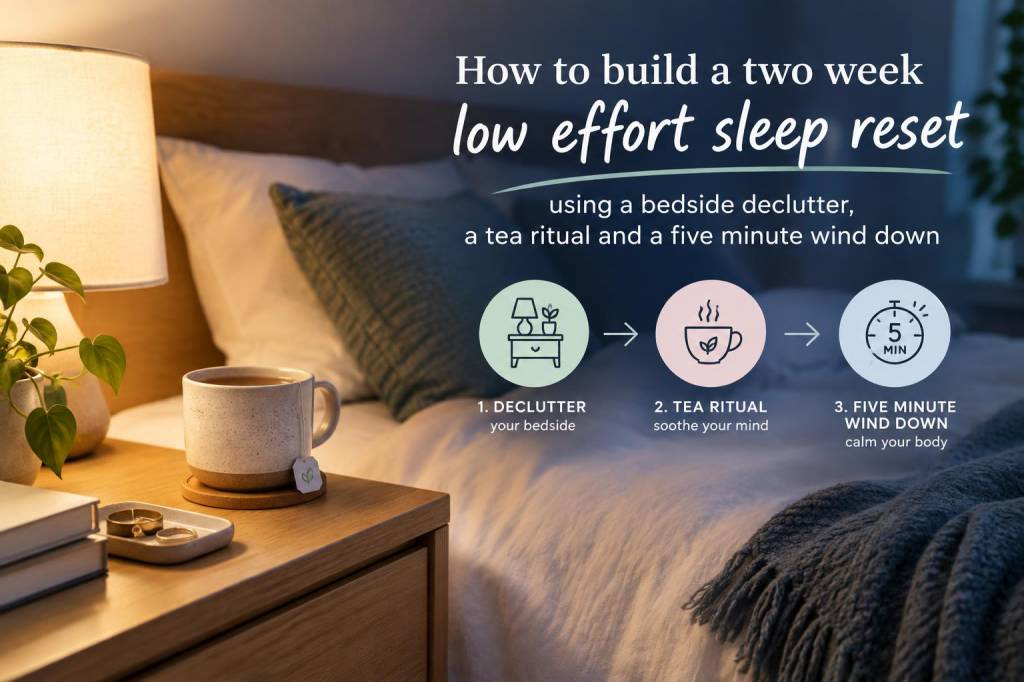
For a long time I treated sleep like something that would sort itself out if I was "tired enough". It rarely did. Over the years I’ve learned that small, gentle rituals stacked together are what make the biggest difference — not dramatic all-or-nothing changes. This two-week, low-effort sleep reset is something I use when my nights get scattered: a bedside declutter, a calming tea ritual, and a five-minute wind-down that signals to my body and mind that it’s time to rest. It’s simple, repeatable, and feels doable even on busy days.
Why these three things?
Each element serves a different function. The bedside declutter clears visual noise and reduces the number of small decisions that can wake me in the night. The tea ritual cues my nervous system to relax through a predictable sensory routine. The five-minute wind-down is intentionally short — it’s a realistic way to close the day without adding pressure. Together they create a consistent pre-sleep scaffold that helps mood, sleep latency (how quickly I fall asleep), and sleep continuity.
Week zero: a gentle prep
Before we start the two-week reset, spend an evening doing a very light preparation so the routine feels natural.
- Check your mattress and pillow comfort: if something feels off, try a cheap pillow topper or a different pillow — I love a medium-firm memory foam for neck support.
- Set a bedtime window: aim for the same hour each night (give or take 30 minutes). Consistency matters more than the exact time.
- Gather your tea supplies and a small tray or coaster to keep by the bed. If you like, choose a small ceramic mug — a tactile object becomes part of the ritual.
Bedside declutter: what and how
The bedside area is deceptively influential. A cluttered nightstand can hold loose ends, devices, and visual reminders that pull the mind back into “doing” mode. Here’s a short process I use that takes ten minutes.
- Empty the surface: remove everything from the nightstand. Put items into three piles — Keep, Store, Remove.
- Keep only essentials: torch (or small lamp), a book (or e-reader with night mode off), water carafe or glass, lip balm, and your tea tray. If you need medication or a CPAP device, of course keep that accessible.
- Limit tech: my rule is no screens on the bedside surface. Phone goes on charge across the room or in a drawer, set to Do Not Disturb. If you rely on your phone as an alarm, use a simple alarm clock (I like a small analogue one) or a smart plug to charge away from the bed.
- Soft lighting: swap harsh overhead lights for a bedside lamp with a warm bulb (2700K). A dimmer or a lamp with two levels is perfect for low-light reading.
Keeping this area tidy makes it easier to relax. When I wake in the night, I’m not confronted by a visual to-do list — which in turn makes it easier to drift back to sleep.
The tea ritual: timing and choices
A ritual doesn’t need to be elaborate. Mine is intentionally short: steep, sip, and settle. Choose a caffeine-free tea you genuinely like. For me that’s chamomile or a gentle lavender-camomile blend. Here’s how I do it:
- Timing: brew a cup 45–60 minutes before your intended bedtime. This gives the warming, comforting effect time to calm you.
- Preparation: use a small kettle and a tea infuser or a pre-bagged herbal tea. I find using a favorite mug makes the ritual feel special without fuss.
- Mindful sipping: sit in a chair or on the edge of the bed — don’t scroll or stand at the sink. Breathe slowly while you sip: in for four, out for six. Focus on the warmth, aroma, and taste. This sensory focus anchors your attention away from worries.
- Optional add-ins: a teaspoon of honey, a sliver of fresh ginger, or a tiny splash of oat milk if you like it creamier. Avoid heavy sugar or lots of milk right before bed.
The five-minute wind-down
The trick is to make the wind-down reliably short and easy to perform even when you’re tired or late. Here’s my five-minute sequence — you can adapt any step as needed.
- One-minute tidy: take a small basket and sweep the main surfaces near your bed (glasses, the tea tray, that stray sock). This physical action helps create a boundary between “day” and “night”.
- Two minutes of breathing: sit comfortably, close your eyes, and do box breaths or a 4-6 breathing pattern. Notice any tension and deliberately soften those muscles.
- One minute of gratitude or review: list quietly three small, specific things that went well that day — not big achievements, just small graces (a hot cup of afternoon tea, a sunny walk, a friendly chat).
- One minute of intention: choose one simple intention for sleep: “I will rest now”, “I will let go until morning”, or “My body will reset.” Repeat it gently as you lie down.
Sample two-week schedule
Consistency is the secret ingredient. This schedule is intentionally light:
- Daily: bedside tidy every evening, tea 45 minutes before bed, five-minute wind-down immediately before turning out the light.
- Week 1 focus: cement the habit. Aim to do the routine at least five nights this week. Don’t worry about perfection.
- Week 2 focus: notice subtle changes. If falling asleep faster, allow the bedtime to stay the same. If you wake in the night, practice the breathing portion and keep lights low.
Common questions and troubleshooting
What if I can’t give up my phone as alarm? Place it out of arm’s reach and use Do Not Disturb. You can also use a small alarm clock — they’re inexpensive and reduce temptation.
My partner’s habits differ — how can I adapt? Create your personal bedside zone and do the ritual on your side. Use headphones for any audio relaxation or try a shared compromise like dim lighting and separate bedside surfaces.
What if herbal tea keeps me awake? Some people are sensitive to certain herbs. Try plain warm water or a caffeine-free rooibos. Make the warmth and ritual the focus, not the tea itself.
I wake at 3am worrying — how can this help? Practice the two-minute breathing immediately and repeat a short grounding phrase (e.g., “This is temporary”). Avoid looking at screens; if you need to get up, keep lights dim and keep movements slow.
Small extras that help
- Eye mask: a soft, weighted sleep mask can block stray light and feels comforting.
- White noise: a low-volume fan or a white-noise app (on a separate device or a speaker across the room) helps if you’re easily disturbed.
- Calming scents: a few drops of lavender on a tissue tucked in your pillow can be soothing but avoid overpowering scents.
This reset is intentionally modest because small changes that fit into real life are the ones that last. Over two weeks you’ll likely notice small shifts — falling asleep a little faster, waking fewer times, or simply feeling calmer at bedtime. If something doesn’t work for you, tweak it. The point is to find a gentle set of cues that tell your body: it’s time to rest.